
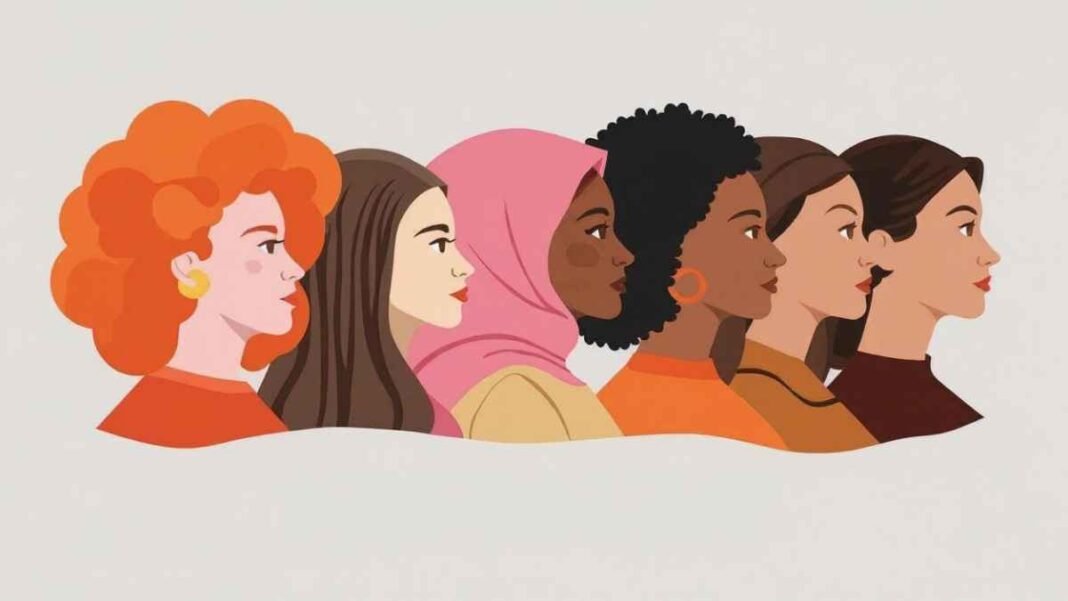
For a very long time, the men dominated leadership. It was a man’s affair, men made the rules for men, and these rules were so strict that there was hardly any space for others. Still, over the centuries and across the continents, a series of exceptional women defied such limitations. They directed their countries in times of war and crisis, initiated grassroots movements, transformed the boardroom environment and redefined power that was combined with clear vision, bravery and strong beliefs. The story of leadership was not merely supplemented with the presence of women through their work, the whole narrative was transformed.
The Queen Who Changed the Royal Game: Elizabeth I of England
Elizabeth I, the Queen of England between 1558 and 1603, is one of the few historical figures who managed the dangerous aspects of power so skillfully. At the time women were generally thought to be incapable of ruling, Elizabeth not only defied the societal expectations of her time but also cleverly used each of her so-called weaknesses as tools of strength. For example, she remained unmarried, which was considered a very unusual thing back then – and she used this to her advantage in many ways, like diplomatically playing foreign suitors against each other and ensuring that no man could challenge her for the throne.
Elizabeth had ruled with an excellent mix of smartness, appearance and political sense. She created the image of the “Virgin Queen” not as a lady of a lower sex but rather as a queen who was England to the very core. Her speech to the soldiers at Tilbury on the night before the Spanish Armada is one of the most powerful voices of leadership ever recorded, her words going beyond the gender and rank barriers to touch the hearts of those who had faith in her. Elizabeth’s rule saw the Elizabethan time flourishing with its sea travel, literary gifts and confidence of a nation and it also revealed the power of single, female-led government. Elizabeth showed a model of governing not by forcing others, but by one’s presence, brain and the skillful winning of loyalty.
The Revolutionary Who Showed That Women Could Lead Liberation: Harriet Tubman
Leading individuals sometimes is glamorized as standing in front of people and delivering speeches. But, Harriet Tubman gave the world a radically different definition of leadership: it is the willingness to continually put oneself in danger for others. Tubman, born into slavery in Maryland around 1822, escaped to freedom in 1849 only to do something that went against every principle of self-interest – she came back. She came back to the South nineteen times and through the Underground Railroad, a secret network of safe houses and routes, she managed to lead about seventy enslaved people to freedom. Navigating the Underground Railroad required not only extraordinary strategic intelligence but also great courage.
Her record of having not lost a single person she was leading is a testament to her tactical brilliance as well as the complete trust she inspired. Should she have failed, she would have been killed or re-enslaved. Yet, her decision-making capabilities under pressure were impeccable. Besides that, during the Civil War, she served as a spy, scout and nurse for the Union Army. She also led the Combahee River Raid in 1863, which made her the first woman in the history of America to lead an armed military expedition. What was remarkable about her leadership was that it was based solely on moral necessity rather than institutional authority – she did not have a title, nor did she command a formal army. But, through sheer willpower and an unshakable sense of purpose, she was able to alter the history of hundreds of human beings. Tubman changed the concept of what a leader could be.
The Politician Who Cracked the Glass Ceiling of Nations: Sirimavo Bandaranaike
Keen on the international political establishment, the rise of Sirimavo Bandaranaike as the prime minister of Ceylon (now Sri Lanka) in 1960 made it impossible for them to ignore a fact that they had been denying for a long time: women were capable of leading countries and winning electoral mandates to do so. The major reason why the woman entered politics was Truth is the husband of her since assassination, Prime Minister S.W.R.D. Bandaranaike, was the one who originally started the murder, besides that she was, in her own right, a formidable politician.
Though barely in her 30s, first serving as the world’s only female head of government for 2 months in 1960, then for 11 years from 1960 to 1970, and finally for 4 years from 1970 to 1977, through her singlehanded leadership of Ceylon as Prime Minister, Bandaranaike nationalized several industries, Sinhalese language and culture were given a much bigger role in the national life, and she also indirectly was involved in the Cold War geopolitics through the leading foreign policy of the country which continued to be nonaligned. In fact, she was worth a lot more than just the sum of her policies. Even more, she broke a huge conceptual barrier that seemed totally impossible when she was serving as the first lady at the highest position of a sovereign country at a time when the women in many Western democracies were still campaigning for their foremost political rights. She paved the way for the political leadership of women which otherwise seemed to be an impossibility and not based on the natural order of things but rather women were simply being excluded by the gatekeepers. Her work only extended the opening of the door through which it is impossible to get a door that has been closed absolutely.
The Civil Rights Leader Who Showed the World How to Organize: Ella Baker
History likes to remember and celebrate orators and figureheads. Ella Baker kept resisting that urge throughout her entire life and even argued how the kind of leadership that is the most long-lasting one is not the leadership that creates a cult of personality around a single person but the leadership that nurtures everyone’s capacity. People called Baker the “Mother of the Civil Rights Movement.” She was the key person behind some of the greatest American organizational accomplishments, working as a main character at the NAACP, a founding member of the Southern Christian Leadership Conference and most importantly, a central figure in the establishment of the Student Nonviolent Coordinating Committee in 1960.
Baker was against the kind of leadership that was based on worship of a charismatic leader and implemented from the top down. On the contrary, she was an advocate of “group-centered leadership”, a concept that sees movements as only able to flourish when ordinary individuals are given the power to lead, not just follow. This belief led her to guide and develop young activists who, in their turn, came to be the leading force of the civil rights era. Baker’s leadership philosophy had a great impact on leadership theory just like any other legislation she assisted in drawing was hit. She showed that a good leader is quite often the one who shuns the spotlight and instead enhances the foundation so that other people are the ones who get their moment. In doing so, she gave a new definition to what enduring leadership is.
The Prime Minister Who Would Not Be Underestimated: Golda Meir
Golda Meir was born in Kyiv in 1898 and was raised in Milwaukee, US. She became Israel’s fourth Prime Minister, and her whole life was a challenge to every conventional expectation of a woman of her time. As a leader of a very young country, she had to meet the challenges of one of the darkest periods in Israel’s history, which was 1969-1974. In 1973, the Egyptian and Syrian armies surprised Israel with a joint attack during the Yom Kippur War. It was the highest stakes possible to test her leadership. Meir’s crisis management during those first dreadful days, making military and diplomatic decisions as well as dealing with the pressure of a surprise attack on the nation, revealed a leader who can remain calm even under fire.
Meir was famed for her outspoken, straightforward, and down-to-earth style. She quickly lost patience with the drama of political performances. The bluntness with which she governed was so striking that her enemies often failed to estimate her correctly. She was not only the first but also, for decades, the only female prime minister in the Middle East, and she held the position proudly. Henry Kissinger, former U.S. Secretary of State and Meir’s counterpart in numerous years of stiff diplomacy, reportedly called her the only man in the Israeli leadership, which, as a backhanded compliment, indicated the very prejudice she spent a long time trying to destroy. Meir will always be remembered as a source of extraordinary power and commitment to a people and a cause larger than herself.
Margaret Thatcher: The Iron Lady who changed economic leadership
Regardless of whether or not you agree with her politics, the one thing you cannot dispute is Truth is Margaret Thatcher has changed forever the nature and the perception of female leadership. It was in 1979 that she made history by becoming Britain’s first woman prime minister. But unlike most female leaders who are seen as consensus builders or mere compromise candidates, she was a conviction politician who was determined to transform the British economy and its relationship with the state. Her premiership was not only the longest of the twentieth century but also more than eleven years. She privatized, disempowered the trade unions, won the Falklands War and characteristically, carried on with the diplomacy of the late Cold War.
Though Thatcher was not conforming to the expectations of feminine leadership, she did want to be compared to the tough standards of political effectiveness. She could be very aggressive when she was an MP, Cabinet member, or even when most of the times she was quite unpopular, she still believed in her course. The Soviet press contemptuously called her the Iron Lady. Instead of being offended, she proudly accepted the name as her own. Women leaders are a matter of complicated and controversial discussion but they cannot simply be overlooked. What she did was to show that it is possible for a woman, a woman alone, to not only hold the highest office in political executive for over a decade but also to change the image of female political authority.
Wangari Maathai: The Activist Who Started a Movement From Nothing
Wangari Maathai launched the Green Belt Movement in Kenya 1977. It initiated as a tree-planting program but later became one of the best illustrations of community-based environmental and political leadership globally. A professor of veterinary anatomy and the first woman in East and Central Africa to get a PhD, Maathai discovered that environmental degradation, poverty, and political disempowerment were not separate issues but getting to the deepest ones together. Her leadership’s genius lay in Really she saw that planting a tree was also a political act of resistance, economic self-determination, and community building.
When Maathai was awarded the Nobel Peace Prize in 2004, the first African woman and the first environmentalist to win it, the Green Belt Movement had already planted over forty million trees in Kenya and had diversified its work by offering civic education and advocacy on governance. Maathai was leading at true personal risk, being harassed, jailed, and physically attacked by the Kenyan government under the despotic rule of Daniel arap Moi. She never retreated. Her leadership style was based on the revolutionary notion that women, In particular rural women with very little political power, were not just the ones receiving the change but its leading agents. She revealed to the world that leadership begins at the grassroots, literally, and develops from there.
Indra Nooyi The CEO Who Broke The Corporate Glass Ceiling
Indra Nooyi’s decision to become PepsiCo’s CEO in 2006 earned her a place among the most influential corporate leaders on earth. On top of that, she was a woman of color who was born and educated in India. Indra Nooyi not only climbed to the top of a multinational company with one of the world’s most famous consumer brands by her sheer strategic genius but also, during her 12 years, transformed PepsiCo from a producer of mainly colas to one of the biggest players in the food and beverage sector, with an emphasis on healthier products, responsible sourcing, and sustainable growth. Besides that, in the 12 years or so that she was running the company, the net revenue of PepsiCo was multiplied by one and a half times.
The “Performance with Purpose” mindset of Nooyi, a company achieving economic success while at the same time acting responsibly towards society and the environment, is a notion that was way ahead of the times and has become a mainstay of today’s corporate world. Also, she was quite open about the difficulties of being both a top executive and a mother, a topic that few people at the level of business power had discussed. Instead of denying the existence of the conflicts that working women face, Nooyi brought them up and helped move the discussion on women in corporate leadership from the general to the immediately relevant. Irrespective of gender, she is one of the most powerful business figures of the modern age.
The Chancellor Who Kept a Continent Stable: Angela Merkel
Angela Merkel was Chancellor of Germany for sixteen years, from 2005 to 2021. Throughout her term, she was the longest-serving elected head of government in the European Union and among the most impactful leaders of the twenty-first century. Originally a physicist by profession, she ventured into politics post the fall of the Berlin Wall. Worth noting, her careful and fact-oriented leadership style was a stark contrast the speech and theatrical modes of politicians which prevail Now. She rarely raised her voice unnecessarily, she never made promises she could not fulfill and her ability to inspire commitment in others largely came through her skills rather than her charm.
During her Chancellorship, Merkel led Germany through many challenges, including the global financial crisis and the European debt crisis. She also gave leadership during the times of Russia’s annexation of Crimea, the 2015 refugee crisis, the rise of populist movements in the Western societies and the emergence of the COVID-19 pandemic. In all instances, she responded by adopting a balanced, fact-based and long-term perspective, eschewing short-term political benefits. One of the most politically challenging decisions for her was to open the doors to more than a million refugees in 2015. Yet, it was the moral righteousness related to that decision which really accounted for her leadership character. Truth is Merkel was a woman in power has implications that go beyond mere symbolism. For sixteen years she governed major Western democracy while making it a reality that a woman occupying the most powerful position in the world was not an exception, but a normal fact.
Malala Yousafzai: The Young Activist Who Showed That Leadership Has No Age Limit
Leadership doesn’t always reside in institutions, boardrooms or ballot boxes. In fact, it can be a twenty year old woman from Pakistan’s Swat Valley who stands for female education through her writings. Malala Yousafzai was initially recognized through her anonymous blog for the BBC Urdu service, where she reported the Taliban’s oppression of girls’ education in her region. And the world was waiting anxiously for the outcome. In 2012, Malala was shot in the head by the Taliban on her way home from school after her identity was leaked. Fortunately, she survived, recovered, and decided to fight again with a clearer vision.
When Malala was seventeen in 2014, she became the youngest laureate of the Nobel Peace Prize. She set up the Malala Fund as a platform to lead the movement for the right of every girl to get 12 years of free, quality education. Besides addressing the United Nations, she has also spoken to governments and communities worldwide. “Malala as a leader is not limited to her cause alone. She showed that one doesn’t have to be given a title, have an army, or possess power for decades to be credible. All that is necessary is to have the moral clarity to recognize it and the bravery to declare it publicly, even at great risk. She has expanded the world’s perception of leadership, and clarified it perfectly for everyone.
A Legacy Still in the Making
The women mentioned in this article did more than just succeed in the existing systems of power. They changed the systems themselves. They redefined the meaning of strength, dismantled the myth that authority belongs only to a certain type of person, and created new models of governance, activism, and organizational leadership that continue to influence the world’s understanding of leadership. Their stories are far from finished. Every woman who leads a boardroom, governs a country, mobilizes a community, or fights for her beliefs though opposition is adding a new chapter to this unstoppable legacy. Changing leadership forever is not a historical feat but a living, continuous work going on every day through those who don’t wait for permission.

Writeic.com is a creative platform dedicated to writers, interview, storytellers, and digital creators who want to inspire the world through words. The authors at Writeic share insights on writing, creativity, storytelling, motivation, success story, and content creation to help readers grow their voice and unlock their creative potential.