
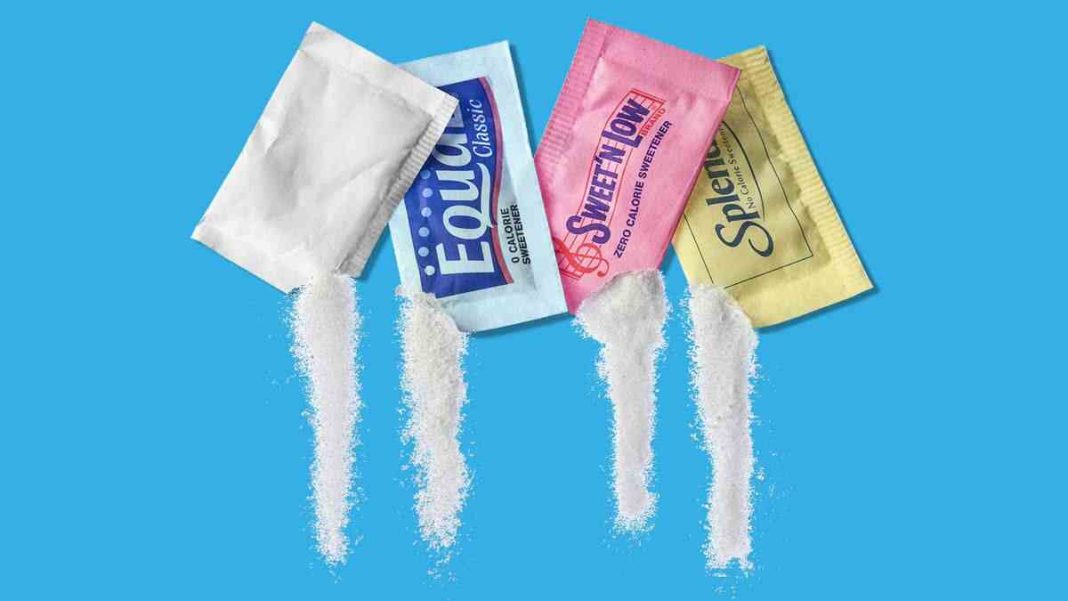
A groundbreaking study published in the September 2025 issue of Neurology has revealed a disturbing connection between popular artificial sweeteners and faster mental decline — a revelation that could rewrite decades of nutritional advice. But in an eight-year study of nearly 13,000 middle-aged adults, researchers found that those who used the most zero-calorie sugar substitutes had brain aging equivalent to 1.6 years older — a 62% faster decline in memory and thinking skills than low consumers. As diet sodas and low-sugar yogurts proliferate supermarket shelves, this data calls for a hard look at what we’ve long considered harmless swaps.
The Brazilian Longitudinal Study of Adult Health, led by Claudia Kimie Suemoto of the University of São Paulo, looked at seven sweeteners commonly used: aspartame, saccharin, acesulfame-K, erythritol, xylitol, sorbitol and tagatose. The participants had a mean age of 52 years, reported their diets at baseline, and then took repeated cognitive batteries to assess verbal fluency, word recall, working memory, and processing speed. Higher consumers, averaging 191 milligrams a day, or roughly the amount of aspartame in a diet soda, experienced steeper declines across the board. The impact was strongest among people under 60 and those with diabetes, demographics that already depend on these additives to regulate blood sugar. “People often think of low- and no-calorie sweeteners as a healthy alternative to sugar,” said Suemoto. “But our findings indicate that some sweeteners might be harmful to the brain over a period of time.” Such vulnerability in midlife is especially troubling, as it reflects exposures years before the onset of dementia symptoms, potentially setting intractable courses for vascular and Alzheimer’s risks. Previous studies have linked these compounds to disruptions of the gut microbiome, inflammation and metabolic chaos, but until now their direct hit on cognition was unknown.
The culprits hide in plain sight: aspartame in diet coke and sugar-free gum, saccharin in flavored waters, erythritol in keto desserts, and xylitol in energy bars. Tagatose was not but all the others were associated with memory lapses and foggy recall. This harkens back to the animal studies where these chemicals crossed the blood-brain barrier, mimicking glucose but not properly fueling neurons. For diabetics, the double whammy is dire: diabetes alone accelerates brain aging, and adding sweeteners on top amplifies the insult, possibly via increased oxidative stress or altered insulin signaling in the hippocampus.
The industry pushback was swift. The International Sweeteners Association responded by saying that global health organizations such as the FDA and WHO maintain that these additives are safe, and that the study is observational, meaning no causation was proven, the diets were self-reported and subject to recall bias, and not all sweeteners were examined. But experts like Boston University’s Dr. Sudha Seshadri called it a wake-up call. “Dietary choices made in midlife may have lifelong consequences for brain health, and that should prompt neurologists to reconsider advice given to patients at risk.”
The timing couldn’t be more poignant. These hidden accelerators are found in ultra-processed foods, which make up 60% of U.S. calories, and consumers are being confronted by a stealthy cognitive thief. Early adopters are shifting gears: swap diet fizz for infused waters and fresh berries or go with natural stevia instead of synthetic blends. Nutritionists recommend whole-food sweetness, such as honey on oats or fruit in yogurt, for long-lasting energy without the neural expense.
This isn’t about demonizing progress, it’s about a move toward precision. As 2025 winds down and brain health takes center stage, the sweetener saga underscores a broader reality: when it comes to caloric compromises, our minds deserve the full measure. More randomized trials are needed but for now the message is clear: that next sip could be costing you clarity years down the line.

Writeic.com is a creative platform dedicated to writers, interview, storytellers, and digital creators who want to inspire the world through words. The authors at Writeic share insights on writing, creativity, storytelling, motivation, success story, and content creation to help readers grow their voice and unlock their creative potential.