

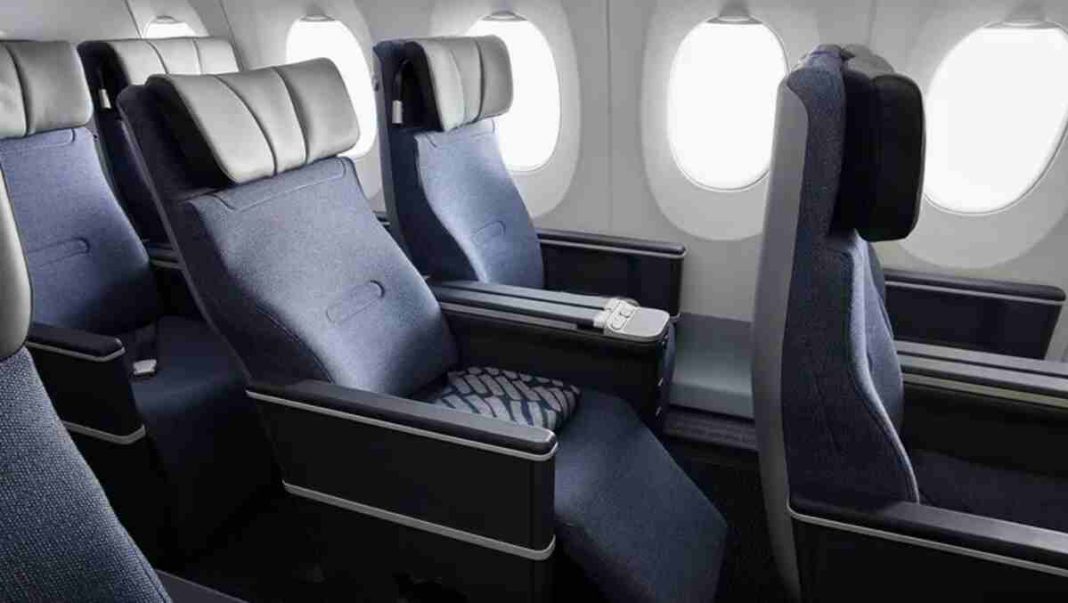
Global airlines are closing the year on a strong note as fourth-quarter earnings reveal a sharp rise in profits, largely driven by sustained demand for premium travel. Business class, first class, and premium economy cabins are outperforming expectations, helping airlines offset rising operational costs and stabilize margins after years of volatility.
Airline executives across North America, Europe, the Middle East, and Asia report that high-yield passengers have become the backbone of post-pandemic profitability. Corporate travelers, high-income leisure flyers, and long-haul passengers are increasingly opting for upgraded cabins, prioritizing comfort, flexibility, and premium services over budget fares.
Premium travel demand has proven resilient even as global economic uncertainty persists. While price-sensitive leisure travel has shown signs of moderation, premium bookings have remained strong, particularly on international routes. Airlines note that travelers are willing to pay significantly more for lie-flat seats, lounge access, priority boarding, and enhanced in-flight experiences.
One of the key factors behind this trend is the evolution of work culture. Hybrid and flexible work arrangements have blurred the lines between business and leisure travel, creating a new category of travelers who combine work trips with extended stays. These passengers often choose premium cabins to ensure comfort and productivity on long-haul flights, boosting average revenue per passenger.
Major carriers have strategically leaned into this shift by expanding premium seating configurations and reducing lower-yield economy capacity on select routes. Airlines are also investing heavily in cabin upgrades, next-generation seating, improved in-flight entertainment, and upgraded catering to differentiate their premium offerings. These investments are now paying off as load factors in premium cabins reach near-record levels.
Long-haul routes connecting major financial and cultural hubs have been the strongest performers. Transatlantic and Asia-Pacific corridors, in particular, have seen premium seat demand exceed pre-pandemic levels. Middle Eastern carriers have also benefited from increased premium transit traffic, positioning their hubs as global connectors for high-end travelers.
Another contributor to strong Q4 performance is disciplined capacity management. Airlines have been cautious about adding new routes and aircraft, focusing instead on profitability rather than aggressive expansion. This approach has kept supply in check, allowing airlines to maintain higher fares without sacrificing load factors.
Fuel price stabilization during the quarter further supported margins, giving airlines some relief after prolonged cost pressures. At the same time, ancillary revenue streams such as loyalty programs, co-branded credit cards, and premium lounge memberships have continued to grow, providing additional income beyond ticket sales.
Airline loyalty programs are playing a particularly important role in sustaining premium demand. Frequent flyers are increasingly redeeming miles for premium seats, while credit card partnerships generate steady revenue regardless of travel cycles. These programs have become financial pillars for many airlines, smoothing earnings during seasonal fluctuations.
Industry observers note that premium travel demand is also being driven by changing consumer priorities. After years of disrupted travel, many passengers now view flying as part of the overall experience rather than just transportation. Comfort, privacy, and service quality have become central decision-making factors, especially for long journeys.
Looking ahead, airlines remain cautiously optimistic. While economic conditions and geopolitical risks could impact travel sentiment in 2026, premium demand is expected to remain resilient. Several carriers have already announced plans to further expand premium economy cabins, viewing them as a sweet spot between affordability and comfort.
The strong Q4 results underline a structural shift in the airline industry. Profitability is no longer solely dependent on filling planes but on maximizing value per seat. As premium travelers continue to drive revenue, airlines that successfully cater to this segment are likely to maintain a competitive edge.
For the global aviation sector, the message is clear: premium travel is no longer a niche offering—it has become a central growth engine shaping the future of airline profitability.
