

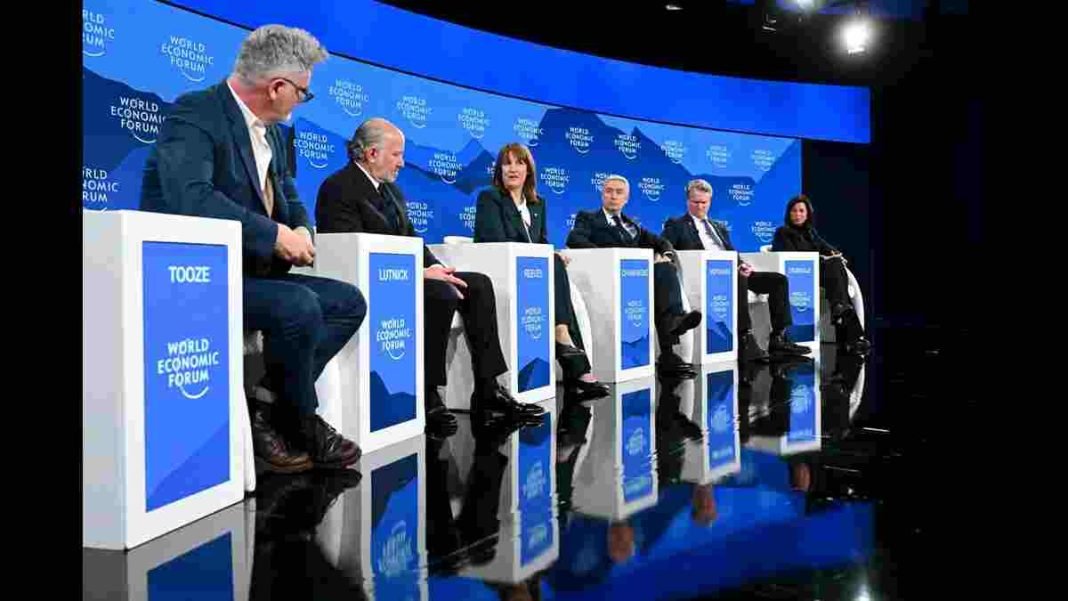
The 56th World Economic Forum Annual Meeting 2026 in Davos, Switzerland, has quickly become the focal point of global discourse, bringing together heads of state, top executives, policy makers, and thought leaders under the theme A Spirit of Dialogue. This year’s meeting is unfolding against a backdrop of unprecedented economic turbulence and geopolitical tension, sparking intense debate about the state of the world economy, mounting risks, and the strategic direction of global cooperation.
At the heart of discussions is the Global Risks Report 2026, published just ahead of the forum. Drawing on the insights of more than 1,300 experts from government, business, academia, and civil society, the report paints a stark picture of the global landscape. Geoeconomic confrontations have surged to the very top of the risk hierarchy, overtaking traditional concerns such as armed conflict and extreme weather events. In this context, geoeconomic risk refers to the strategic deployment of economic tools—such as tariffs, sanctions, investment curbs, and trade restrictions—as instruments of geopolitical power. This shift reflects growing fragmentation in global cooperation and highlights how economic policies are increasingly weaponized in service of national interests.
The short-term outlook for 2026 is overwhelmingly uncertain. Roughly half of risk survey respondents expect either a “turbulent” or “stormy” global environment over the next two years, with only 1 percent anticipating a calm scenario. This sense of instability is mirrored in live debates in Davos, where political flashpoints have entered the traditionally consensus-driven space. The presence of U.S. political figures and contentious issues like tariff threats tied to Greenland have shifted parts of the forum into a highly charged political battleground. Such developments have underscored how geopolitical tensions are influencing market expectations and investor sentiment in real time.
Economic risks remain a central concern. Inflation pressures, potential downturns, and the threat of asset bubbles have sharply risen in the report’s short-term outlook, propelled in part by rising national debts and the rapid pace of technological investment. Experts warn that these financial conditions—if not addressed collectively—could destabilize growth in major economies. Indeed, institutions like the International Monetary Fund have cautioned that global resilience is at risk should the current boom in artificial intelligence (AI) fail to deliver expected productivity gains, underscoring the fragility of growth projections tied to tech expansion.
The debate over technology’s role at Davos is both optimistic and cautionary. AI remains a transformative force, but leaders are grappling with how best to harness it without exacerbating inequality or undermining economic stability. BlackRock CEO Larry Fink, for example, addressed concerns about an AI investment bubble, suggesting that while speculative excess may occur, the broader strategic importance of AI remains intact. Still, other voices, such as Mohamed Kande of PwC, argue that a majority of companies are not yet reaping the benefits of AI investment due to foundational gaps in strategy and implementation.
Social issues are also prominent on the Davos stage. A powerful open letter signed by nearly 400 millionaires and billionaires calling for higher taxes on the super-rich has captured global attention and highlighted deep concerns about wealth concentration, political influence, and inequality. This unusual move illustrates a broader acknowledgment among elite circles that systemic inequality is not just a moral issue but a catalyst for political polarization and economic instability.
Climate and environmental discussions continue to evolve at the forum. While environmental risks have slightly declined in the immediate risk rankings—largely because economic and geopolitical threats have surged—the long-term consequences of extreme weather and biodiversity loss remain among the most severe risks over a ten-year outlook. Leaders are increasingly acknowledging that transitioning away from fossil fuels is not debatable but urgent, as renewable energy sources gain economic traction and resilience globally.
Amid these global tensions, individual nations and regions are making their own strategic plays. Egypt’s delegation in Davos has emphasized its role in promoting regional stability and investment, while regions like India’s Telangana are showcasing visionary economic plans that attract global capital and partnerships.
As the World Economic Forum Annual Meeting progresses, one clear theme has emerged: the world stands at a crossroads where economic strategy, geopolitical rivalry, technology innovation, and social equity intersect. Leaders are wrestling with how to foster cooperation in an increasingly competitive and fragmented global environment, making Davos 2026 one of the most consequential gatherings in recent memory.
