
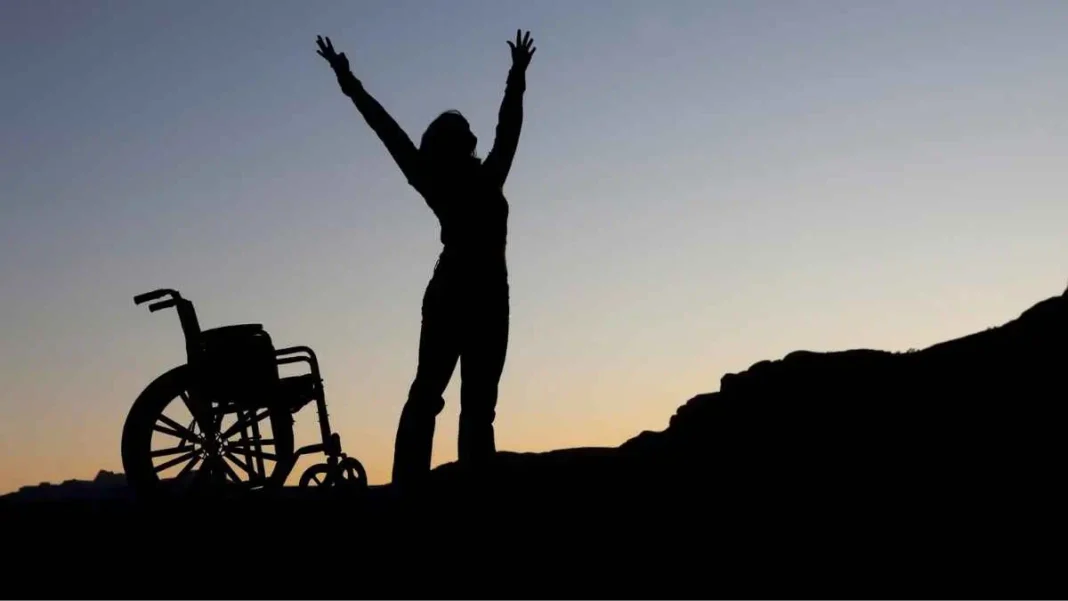
Everyone, at some point, has experienced that feelingthe tightening of the chest, the racing heartbeat, the sudden isolation of the whole world into one single, scary point. Fear is the most primitive and, at the same time, the most inclusive of human emotions, it is with us from the very moment of our being and it keeps appearing at every turning point of an extraordinary life. It is indifferent to one’s strength or weakness, confidence or insecurity, it does not care if you are left in the spotlight or hidden. Those who have dared the most through the agesthe go-getters, the creators, the fighters, the venture makersour very heroes of courage whom we today recklessly attribute to mere chancefear was there with them. They just decided not to give fear the final word of what they were up to.
The process of getting through and beyond fear begins with a true and unprejudiced recognition of fear. Fear is not a sign of poor character or a lack of strength. It is a deeply ingrained instinct for survival, probably the most sophisticated mechanism our bodies possess among the oldest ones. The moment the brain identifies a threat, whether it is real or imaginary, it triggers a full scale biological reaction involving various functions of the body that prepare the organism to either fight or escape or even remain motionless if necessary. The heart speeds up to transport blood carrying the oxygen to the muscles. The system of digestion gets halted to give off energy to where it is most needed. The senses become sharper. The breathing accelerates.
This response, the well-known fight-or-flight, was developed throughout the hundreds of millennia of evolution to allow humans to escape real, physical dangers. And even nowadays, if the threat is a wild animal, it sufficiently gets the job done. Issues arise when what is feared the most ends up being a job interview, a challenging talk, a creative venture, or the possibility of one’s failurethings that, although dangerous to our nervous system actually do not threaten our physical safety in any way. Recognizing such difference is the first step to becoming wise about fear.
Not all fears are of the same kind, and one of the topmost skills that a person can acquire is the capability to differentiate between some fear that really protects and some fear that is just a limitation. A rational fear matches the real threat. So, the fear that makes you retreat from the very edge of a cliff, or the fear that makes you drive more carefully when it is raining heavily represent rational fears they are simply a true recognition of being at risk and a reason for you to be safe. On the contrary, irrational fears tend to exaggerate the real threat. The fear that convinces a great artist not to display his art, the worry that prevents a person from getting on with a love relationship, the dread that makes a skilled worker not to talk publicly, is quite real in their intensity but they misrepresent the level of danger involved. And In reality you ask the question about the reality of your fear, whether the threat is real and proportional, or merely imagined and inflated, Definitely counts as a very powerful act of rational self-recalibration.
Initially, the most instinctive reaction to something frightening is to run away, and it is true that running away from something does Actually alleviate the situation to an extent. By disengaging ourselves from the feared situation, our level of discomfort immediately drops, our heart rate slows down, and the feeling of threat is lessened. What running away from the fear does not do is solve the genuine problem. Quite on the contrary, it makes the situation worse. Each time a person flees from a terrifying situation, a person’s mind gets confirmation that the situation must have been really terrifying, if only you had not fled you would not have thought so! Eventually, this scenario gets reinforced and the level of the fear increases over time, and its spreading happens to such an extent that even the mere thought of getting close to that feared thing causes a lot of anxiety. To be able to understand how manageable fears turn into phobias, social anxiety into isolation, professional caution into paralysis, one should keep in mind that avoidance of the feared object only accentuates the problem. The nasty secret about fear is thatbysole avoidance you will make it only worse Yet, the way forward, Yet counterintuitive it may feel at the time, is to move toward the fear, not away from it.
There is a tremendous. Describing fear precisely and clearly can be very empowering. Often we have fears that are so general, diffuse and ill-defined that it is really impossible to deal with them rationally. Usually, such fears are formulated as worrying about “the future” or about “failing” or about “what others might think” – Though these are obviously so broad that it is quite impossible to face them directly… Fear when it is not clearly defined is very scary and seems to be everywhere. Yet if we give it a name, then it becomes something we can handle. It is a good idea to remember the sentence, ‘I am afraid that if I publish this work, people who matter to me will think it is not good enough’, as it is a very real fear that can be dealt with…
A fear like ‘I am afraid this presentation will go badly and I will look incompetent in the eyes of my colleagues’ is completely understandable and can be prepared for. Describing what the fear is, and why, does not mean that the fear is instantly gone, but it does reduce it to a level where one can feel one can do something about it. State your fears. Write them down. Make them specific and tangible. Then, embark on the journey of genuinely confronting yourself. Choosing to see fear as an informing source of information rather than as a stop sign is a great perspectivechangethatone of the.
The misconception of courage has led to unneeded suffering. People often think that courageous individuals are not scared – that courage is an inherent character trait and not a conscious decision. But why? This notion is not only untrue but also detrimental as it makes people think that fear can deter them from displaying courage. Actually, courage is acting though fear. anyone who has ever done a really brave thing — spoken one’s mind, gone the less traveled way, stood on a principle at a personal sacrifice, created something that is both vulnerable and meaningful — was afraid. That’s the way fear works. They went on and did the thing. There’s a small but significant semantic difference there. It’s the basic step in the direction of behaving courageously. The thing is that you do not have to stop feeling the fear to take a courageous step. What is required is that you take a step and bring the fear with you.
The most evidence based in psychology and in living life is exposure over time. This is deliberately practicing going closer and closer to the feared situation a tiny amount at a time, until each increase in intensity becomes manageable to build up a muscle of bravery and mastery. The person who fears public speaking doesn’t have to jump straight into that conference with 1,000 people. They may start by talking more in smaller groups, then giving team presentations, then running local workshops, building their skill and confidence at each step. As this occurs, the brain will use the changes in fears to ‘reprogram’ what is manageable, and when a previously terrifying situation has become manageable and then familiar, it becomes a life skill. This is a demanding commitment and needs perseverance as well as compassion but it is a remarkable experience to be a part of.
How much fear you feel and how effectively you overcome it depends on your connection with fear. If you have a fixed mindsetyour courage and resilience are fixed traitsfear will feel like a judgment against your character. If you think that if you’re fearful, it means you’re not brave enough, then not only are you afraid, you’re ashamed; and shame is one of the most disabling emotions there is. A growth mindset Still turns fear into a sign of growth underwayit shows that you are doing something new, pushing your limits, and that is how growth happens. People who confront their fears with interest, kindness to themselves and a confidence in their capacity to learn and evolve from discomfort tend to be more resilient, to recover from failures faster and to have a wider range of experiences than those who react to fear with judgment and avoidance. The pain of fear is not taken away by mindset. It just indicates whether you will experience that pain as a barrier or as an access.
It is much harder to confront fear if you are by yourself rather than with the help of those who believe in your ability to overcome it. If you have a friend you can trust, a mentor, a coach, or a therapist who encourages you without downplaying Really what you’re doing is hard, that alone makes quite a difference in the results. At the very core, we humans are social beings and being seen and accepted while we are vulnerable is, in fact, one of the most potent ways to counter the isolating nature of fear. You don’t need to justify or defend your fears when you talk about them with someone who trusts you; it’s just that by doing this, you take them out of the private darkness where they grow without being checked and bring them into a relational space where they can be met with perspective and compassion. In cases where fears are deeply rooted, unrelenting, or dramatically interfere with daily living, it is not a sign of weakness to seek help from a therapist Most of all one who has experience in cognitive behavioral therapy or exposure-based techniques but rather a smart decision in the use of the best tools available.
Among all the fears that hold back the human potential, perhaps the fear of failure is the one that costs us the most. It leads talented people not to do meaningful work; it confine capable professionals in smaller jobs than their abilities; it silence those voices that need to be heard; it hinder creative projects from reaching their audience. In essence, the fear of failure is a fear of being judged a human worry about how you are perceived by others when things don’t go your way. The solution is not the deceitful assurance that you will never fail. Failure is a part of any life lived with ambition and authenticity. The solution is a change in the way we view failure one that is not a punishment, but rather a piece of information; one that acknowledges failure as a necessary step to any meaningful work, not a reflection of your value as a person. Actually, there is always a phase of failure in the middle of a success story. Those who succeed are not the ones that never fail, but the ones that are ready to fail forward.
On the other side of your greatest fears is an ife that is almost Sure bigger and deeper and more fulfilling than everything fear has caused you to settle for. To face fear is not to do one great thing, but to do each of our lives in infinite wonderful repetitions, to step daily and hourly and moment to moment into fear’s discomfort, to trust yourself through it and to growthroughit, to say no to the dull life wherealldoesn’t have to be this way, in exchange for the false security of safety. Not that we should risk carelessly or take the real threat lightly. We must let fear shape usbut not dominate us, a real nuance of the each life this life could be if we only risked more of itand conquering it as one moment after another of choosing to risk more of it. Each expansion of our circle of our self determination, of our self-evolution, is a victory against fear. Fear may be eternally close at the gateway and yet you are free to choose whether you step through.

Writeic.com is a creative platform dedicated to writers, interview, storytellers, and digital creators who want to inspire the world through words. The authors at Writeic share insights on writing, creativity, storytelling, motivation, success story, and content creation to help readers grow their voice and unlock their creative potential.